 Arts Capacity
Our story
It began with a question: does music heal?
For about two years, that question went unanswered — until the first recital was performed inside a faith- and character-based prison, and the room answered for us.
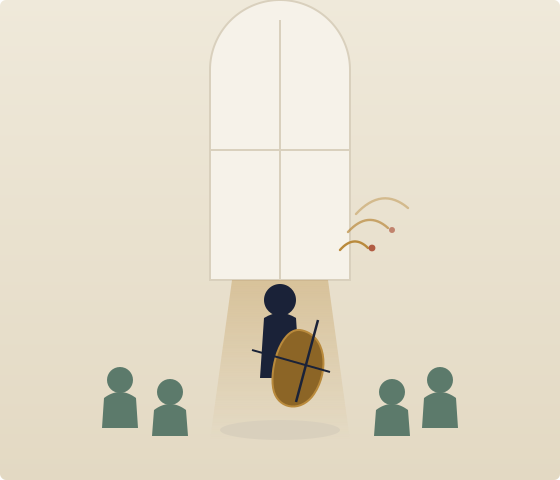
Arts Capacity grew out of a simple curiosity about bringing live, contemporary music into a place where it is rarely heard. We weren't sure what would happen. What we found was that when world-class musicians perform without preamble — and then ask the people in the room what they felt — something rare opens up.
The conversations were never planned. They consisted of sharing music and listening to impressions, opinions, and thoughts. Listeners discovered that their interpretations mattered, that their words would travel back to the composers themselves, and that for an hour, they were simply an audience of curious human beings.
From there the work grew: more recitals, more partner ensembles, surveys to capture the impact, and a widening belief that the arts can be a genuine tool for change.
What guides us
Three convictions
Everyone can interpret
There are no rules for hearing a piece of music. That equality is the whole point — and the doorway in.
Listening is dignity
Being asked your opinion, and genuinely heard, restores something that institutions often strip away.
Art is a tool, not a luxury
We treat live music as a serious instrument for reflection, resilience, and measurable change.
Be part of the next chapter.
Whether you give, partner, or perform, there's a place for you in this work.
Get in touch